Load Distribution Before Walls Go Up
Concrete Footings in Sanford for new construction projects requiring stable support beneath foundation walls and structural loads
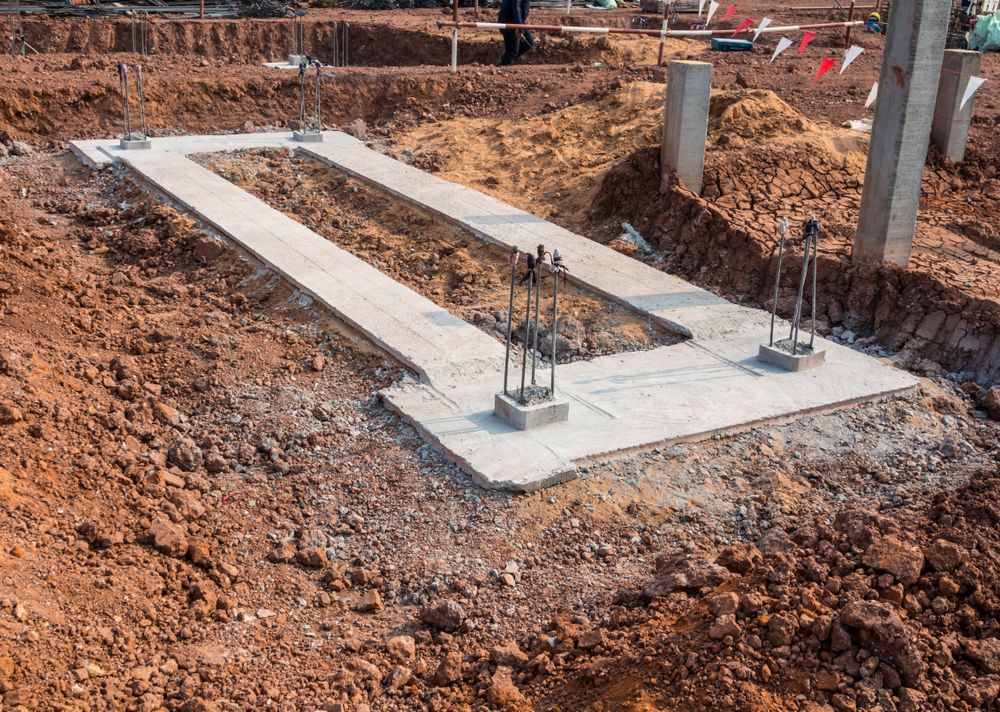
Footings transfer building weight from concentrated foundation walls into the soil below, spreading the load across a wider area to prevent settling that causes cracks and structural movement. NC Outdoor Design Concrete LLC pours residential and light commercial footings throughout Fayetteville, Raleigh, Durham, Chapel Hill, and Holly Springs for builders who need accurate placement before foundation walls are constructed. The work addresses both perimeter footings that support crawl space foundations and interior footings that carry point loads from posts or beams, with reinforcement added based on structural specifications and soil bearing capacity.
Installation involves excavating trenches to the depth specified in building plans, then verifying that the bottom reaches undisturbed soil rather than fill material that will compress under load. Forms or trench walls establish width, and concrete is placed in continuous pours to avoid cold joints that create weak points where sections meet.
Schedule a project evaluation to review excavation requirements and footing dimensions for your building plans.
Why Footings Must Be Installed Correctly
A footing that's too narrow or placed on unstable soil will settle unevenly, causing the foundation wall above to crack and the building structure to shift out of level. Proper footing installation requires excavation below the frost line in areas where ground freezing occurs, placement on undisturbed or properly compacted soil, and width calculations based on the load being transferred and the soil's bearing capacity. Reinforcement options include fiber for crack control or rebar when structural engineers specify tensile strength to span soft spots or resist lateral soil pressure.
After footings cure, foundation walls or slabs are constructed on a stable base that doesn't move as building loads are added during framing and finishing. The structure remains level, and you won't see diagonal cracks in foundation walls or floors that slope toward settled sections.
Footing work includes excavation, placement, and finishing to create a level surface for subsequent construction, but does not include foundation wall construction, drainage tile installation, or backfill. Projects requiring stepped footings on sloped sites are planned during the initial site review to ensure proper elevation transitions.
Answers to Footing Installation Questions
Builders and property owners preparing for new construction need clarity on footing requirements and installation standards before excavation begins.
What determines footing depth and width for a specific project?
Building codes specify minimum dimensions based on soil type and building loads, with engineers sometimes requiring larger footings when bearing capacity tests show weak soils or when concentrated loads exceed standard residential values.
How do you verify that excavation reaches stable soil?
The trench bottom is inspected for consistent firmness and absence of organic material or fill, and in questionable conditions, a soils engineer may test bearing capacity before approving concrete placement.
When is rebar required instead of fiber reinforcement alone?
Structural plans specify rebar when footings must span across soft soil pockets, resist lateral pressure from retaining walls, or support point loads that create tensile stress beyond what fiber strands can control.
Why do footings need to cure before foundation walls are built?
Concrete develops strength gradually, and placing heavy block or poured walls on fresh footings can cause cracking or displacement that compromises the entire foundation system.
What happens if footings are poured during freezing weather in Central North Carolina?
Frost damage weakens the surface and prevents proper bonding when foundation materials are applied, so pours are scheduled when temperatures remain above freezing for at least 48 hours.
NC Outdoor Design Concrete LLC coordinates footing installation with your construction schedule and ensures dimensions meet structural specifications before walls are constructed. Call (919) 721-3076 to discuss your building project and review site-specific footing requirements.