Foundations That Support What You Build Next
Concrete Slabs in Sanford for garages, sheds, workshops, and structures requiring stable platforms
Any structure built to last begins with a properly installed foundation slab that resists settling, cracking, and moisture intrusion. Without correct excavation depth, grading, and base compaction, even well-built garages and workshops will develop floor problems that show up as cracks, uneven surfaces, or gaps where walls meet the slab. NC Outdoor Design Concrete LLC installs concrete slabs for residential and small commercial applications across Central North Carolina, using fiber-reinforced concrete and optional rebar reinforcement to create stable platforms ready for construction or immediate use. The work includes site preparation that accounts for soil conditions, drainage patterns, and the load requirements of whatever will occupy the finished slab.
Proper excavation removes unsuitable soil and organic material that would compress over time, while the compacted gravel base distributes weight evenly and prevents the slab from sinking into soft ground. Rebar reinforcement adds load-bearing capacity for heavier applications like vehicle storage or workshop equipment, creating a rigid grid within the concrete that resists flexing under concentrated weight.
Request a detailed estimate to review site-specific preparation requirements and reinforcement recommendations.
The Difference Between Standard and Reinforced Slabs
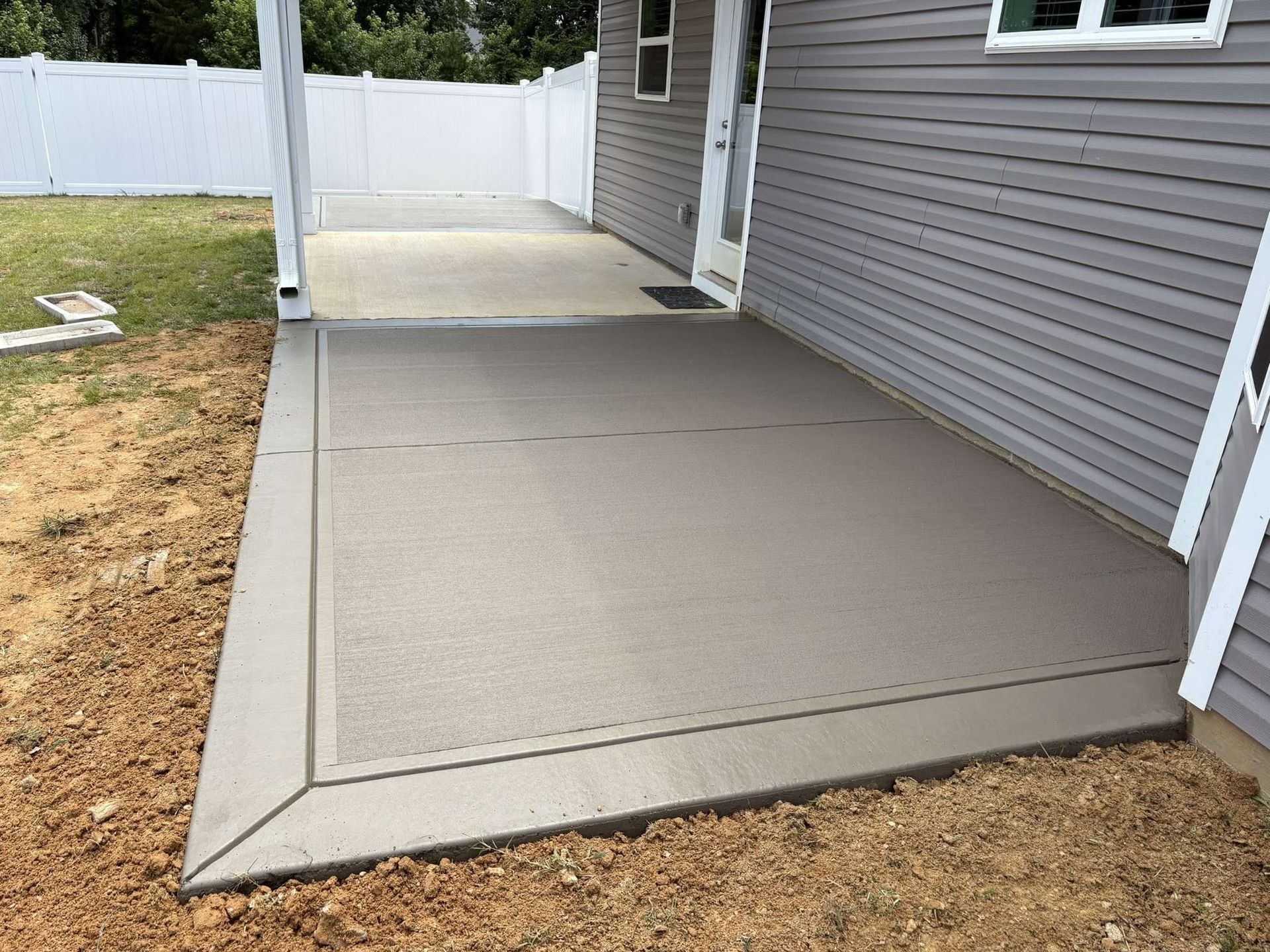
Slab installation starts with layout and excavation to the depth required for the aggregate base and concrete thickness. The subgrade is graded to direct water away from the finished surface, then compacted crushed stone is installed and leveled to create a stable, non-shifting platform. Fiber reinforcement is mixed into the concrete to control shrinkage cracking during curing, while rebar reinforcement is positioned within the slab thickness before concrete placement to add rigidity and tensile strength across the entire surface.
Once the slab cures, the finished surface provides a flat, stable platform free of the dips, humps, or soft spots that develop when base preparation is inadequate. Tools, vehicles, and equipment rest level without tipping or causing localized stress cracks. Water from rain or washing drains off the slab instead of pooling in low areas, and the edges remain aligned with surrounding grade or entry points.
The decision to include rebar depends on what the slab will support and the soil characteristics at the site. Clay soils that expand and contract with moisture changes benefit from the added rigidity rebar provides, as do slabs intended for heavy vehicles, machinery, or storage of dense materials.
What Property Owners Usually Ask
Questions about slab projects often focus on sizing, reinforcement options, and how site conditions affect installation.
What thickness should a garage slab be?
Most residential garage slabs are four inches thick with fiber reinforcement, though heavier vehicles or equipment storage may require six-inch thickness and rebar reinforcement to handle the additional load without cracking.
How does soil type in Sanford affect slab installation?
Central North Carolina has areas with clay-heavy soils that expand when wet and shrink when dry, creating movement that can crack slabs lacking proper base preparation and reinforcement. Compacted aggregate bases isolate the concrete from direct soil contact and reduce movement-related stress.
What is included in a standard slab installation?
The scope covers excavation, subgrade grading, compacted gravel base installation, fiber-reinforced concrete placement, finishing, and control joint cutting. Rebar reinforcement and specific edge details are additional options based on project requirements.
When should rebar be added to a concrete slab?
Rebar is recommended when the slab will support vehicles over 6,000 pounds, when workshop equipment or storage imposes concentrated loads, or when soil conditions create higher risk of differential settling across the slab area.
How long does a slab need to cure before use?
Initial curing takes several days, but full load-bearing strength develops over weeks. Light foot traffic is typically safe within a few days, while vehicle loads or heavy equipment should wait until curing progresses further based on weather conditions and concrete mix design.
NC Outdoor Design Concrete LLC evaluates site conditions and project requirements to recommend appropriate slab specifications. Schedule a free slab estimate to discuss excavation needs, reinforcement options, and installation timelines for your structure.