Safe Pathways Built to Last
Concrete Sidewalks in Sanford for uneven walkways, trip hazards, and limited property access
Sections of sidewalk that have tilted or cracked create liability concerns and accessibility barriers that worsen every season. NC Outdoor Design Concrete LLC installs new concrete sidewalks for residential and small commercial properties throughout Sanford and Central North Carolina, replacing failing sections with properly graded pathways that direct water away from the walking surface. Fiber reinforcement is mixed into the concrete to control shrinkage cracks during curing and add tensile strength across the full width of the walkway.
Site preparation includes excavating to the required depth, establishing correct slope for drainage, and compacting the base material so the finished sidewalk remains level over time. Additional reinforcement options can be recommended when walkways cross areas with poor soil stability or when connecting to existing structures that impose load stress on the new section.
Request a site assessment to evaluate grading requirements and pathway layout options.
What Happens After Installation Completes
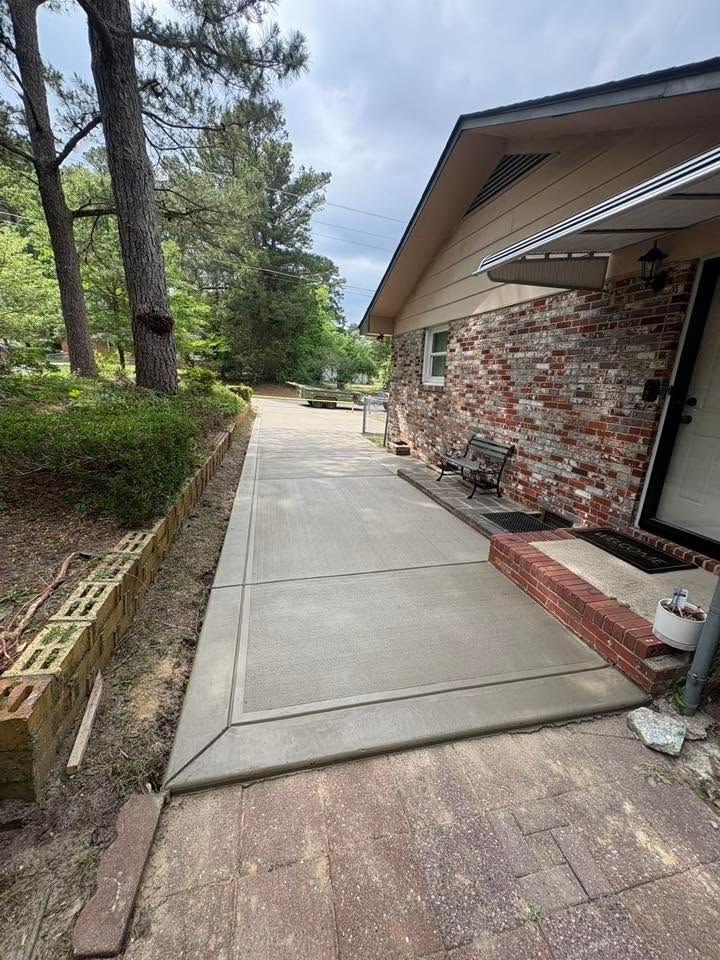
The sidewalk installation process begins with marking the pathway route and removing any existing concrete or unsuitable soil. A compacted gravel base is installed to provide stable support, followed by formwork that defines the edges and controls the thickness. Proper grading ensures water flows off the surface rather than pooling in sections where pedestrians walk.
After the concrete cures, the walking surface will sit level without the raised edges or sunken sections that cause tripping. Water will drain toward landscaped areas instead of collecting on the pathway or running toward building foundations. The transitions between driveway aprons, front entries, and backyard access points will align smoothly, eliminating abrupt height changes that make movement difficult for wheeled carts, strollers, or anyone with mobility concerns.
Sidewalk installations vary based on pathway length, width requirements, and whether the route crosses sloped terrain or requires steps to manage elevation changes. Properties with established landscaping may need narrower excavation zones to preserve root systems near the walkway corridor.
Answers to Frequent Sidewalk Questions
Property owners in Sanford and surrounding areas often have practical questions about sidewalk projects before work begins.
What width should a residential sidewalk be?
Standard front walkways are typically four feet wide to allow two people to walk side by side comfortably, while side-yard or backyard paths may be narrower based on available space and intended use.
How is proper drainage built into a sidewalk?
The pathway is graded with a slight cross-slope, usually one-quarter inch per foot, so water sheets off the surface toward adjacent planting beds or lawn areas rather than pooling on the concrete.
Why do some sidewalks crack while others remain intact?
Cracking usually occurs when the subgrade settles unevenly due to inadequate compaction, when control joints are spaced too far apart, or when the concrete mix lacks reinforcement to handle natural shrinkage stress during curing.
When should a sidewalk be replaced rather than patched?
Replacement is the better option when multiple sections have settled at different heights, when cracks have widened enough to catch footwear, or when surface spalling has created rough, uneven textures across the majority of the walkway.
What does fiber reinforcement do in sidewalk concrete?
Fiber strands distribute throughout the mix add tensile strength that resists micro-cracking during the curing phase and helps control crack propagation if the slab experiences ground movement later.
NC Outdoor Design Concrete LLC provides free consultations that include site evaluation, pathway layout recommendations, and material specifications. Contact the company to discuss accessibility improvements and installation timelines for your property.