Surfaces That Look Custom Without the Cost
Stamped Concrete in Sanford for properties needing decorative outdoor features without natural stone expense
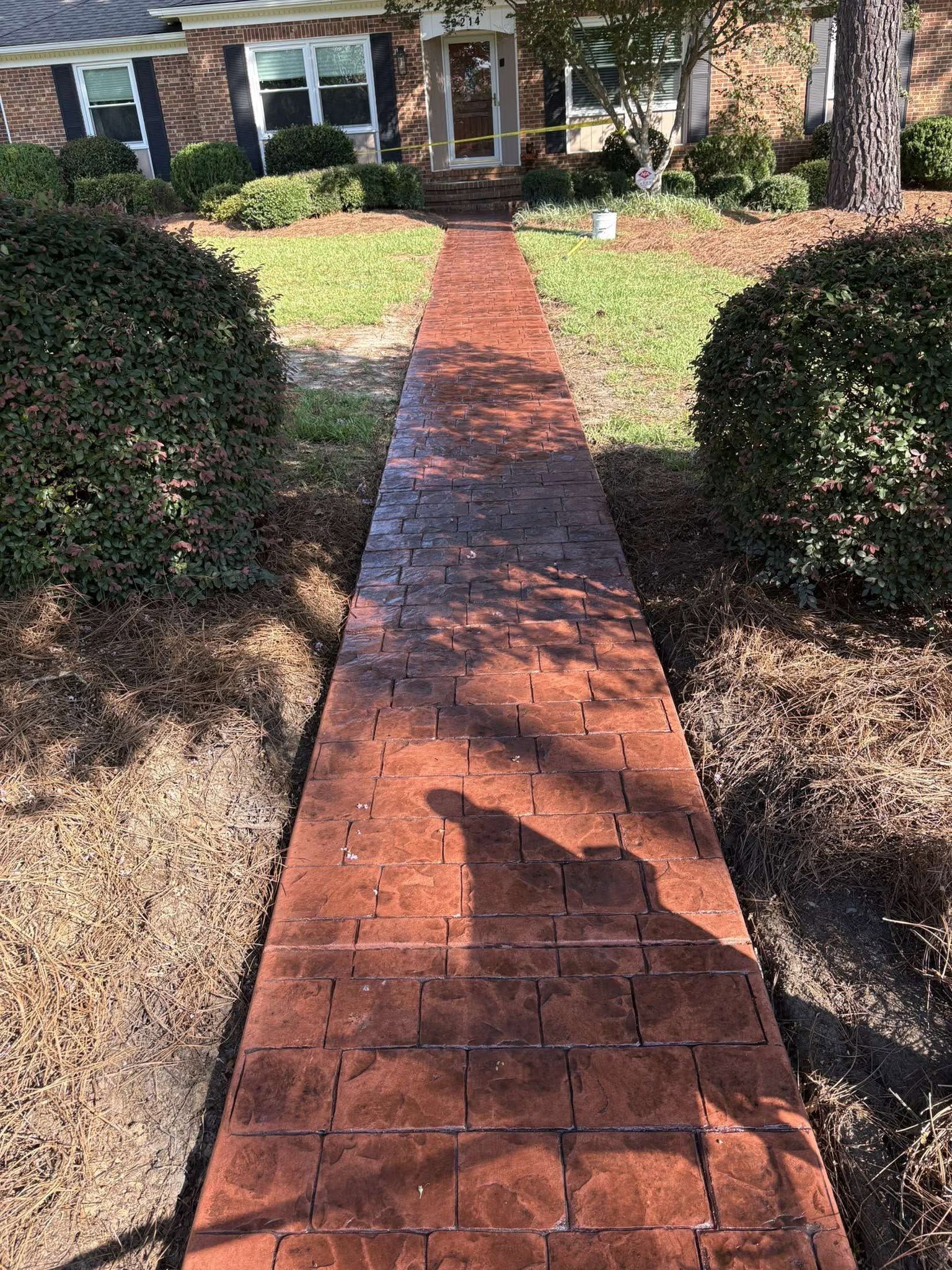
Stamped concrete replicates the visual texture of stone, brick, slate, and other high-end materials while maintaining the structural advantages and lower cost of a standard concrete installation. The stamping process applies patterns and textures to the surface before the concrete fully hardens, creating realistic impressions that add visual interest to patios, walkways, and outdoor gathering areas. NC Outdoor Design Concrete LLC installs stamped concrete features throughout Raleigh, Durham, Chapel Hill, Fayetteville, and nearby communities, using fiber-reinforced concrete to ensure the decorative surface remains structurally sound over time.
The installation follows the same site preparation and base work required for any concrete project, with the decorative stamping applied during the finishing stage. This approach delivers a custom appearance without the labor-intensive fitting and leveling required for natural stone or individual pavers, and the continuous slab eliminates joints where weeds might grow or sections might shift.
Discuss available patterns and color options during a project consultation to match your property's architectural style.
What Proper Stamping Requires
Stamped concrete begins with standard excavation, grading, and base preparation to create a stable foundation. Once the concrete is placed and leveled, pattern mats are pressed into the surface while the material is still workable, transferring the texture of stone, tile, or wood grain into the top layer. Release agents prevent the stamps from bonding to the concrete and can add subtle color variation that mimics natural material. Fiber reinforcement within the mix ensures the slab resists cracking even as the stamped texture adds surface detail.
After curing, the finished surface displays the visual detail of the chosen pattern while providing a solid, continuous walking or driving surface. The texture remains consistent across the entire area without the height variation that occurs when individual pavers settle at different rates. Cleaning requires only sweeping and occasional rinsing, unlike natural stone that may need regular sealing or mortar joint maintenance.
Pattern selection depends on the application and the surrounding landscape design. Some textures work better for walkways where a more pronounced grip is beneficial, while others suit larger patio areas where visual appeal is the primary concern. Color options range from earth tones that blend with natural surroundings to shades that complement exterior paint or trim.
Questions Property Owners Usually Ask
Homeowners considering decorative concrete often want to understand how the material performs compared to alternatives and what maintenance it requires.
What is the difference between stamped concrete and pavers?
Stamped concrete forms a continuous slab that will not develop gaps or uneven sections over time, while pavers are individual units that can shift, settle, or allow weed growth between joints despite proper base installation.
How does stamping affect concrete durability?
The stamping process is purely cosmetic and does not reduce structural performance. Fiber reinforcement in the mix provides the same crack resistance and load-bearing capacity as any properly installed concrete slab.
Why do costs vary for stamped concrete projects?
Pricing depends on project size, pattern complexity, color requirements, and site preparation needs. Intricate patterns with multiple colors require more labor during the finishing stage than simpler single-tone textures.
When should stamped concrete be sealed?
Sealing is optional and depends on the desired appearance and the level of stain resistance wanted. Some homeowners prefer the look of unsealed concrete that weathers naturally, while others choose sealing for added protection and color depth.
What patterns are available for stamped concrete in Central North Carolina?
Common options include slate, flagstone, cobblestone, ashlar stone, brick, and wood plank patterns. The selection process considers both aesthetic preference and how the texture will perform in the intended application.
NC Outdoor Design Concrete LLC provides pattern samples and project examples to help homeowners visualize finished results. Request a free estimate to review decorative options and installation timelines for your outdoor project.