Single-Pour Construction for Faster Timelines
Monolithic Concrete in Sanford for residential buildings, garages, and additions requiring efficient slab and footing integration
Monolithic concrete construction combines the footing and floor slab into one continuous pour, eliminating the separate steps required when footings are placed first and slabs are added later. This approach reduces construction time for residential buildings, detached garages, and room additions where speed matters and where structural loads allow a unified design. NC Outdoor Design Concrete LLC installs monolithic slabs throughout Central North Carolina for homeowners and builders who need stable foundations without the extended timelines of traditional multi-stage concrete work, using fiber reinforcement as standard and adding rebar when engineering plans specify enhanced tensile strength for larger spans or heavier loads.
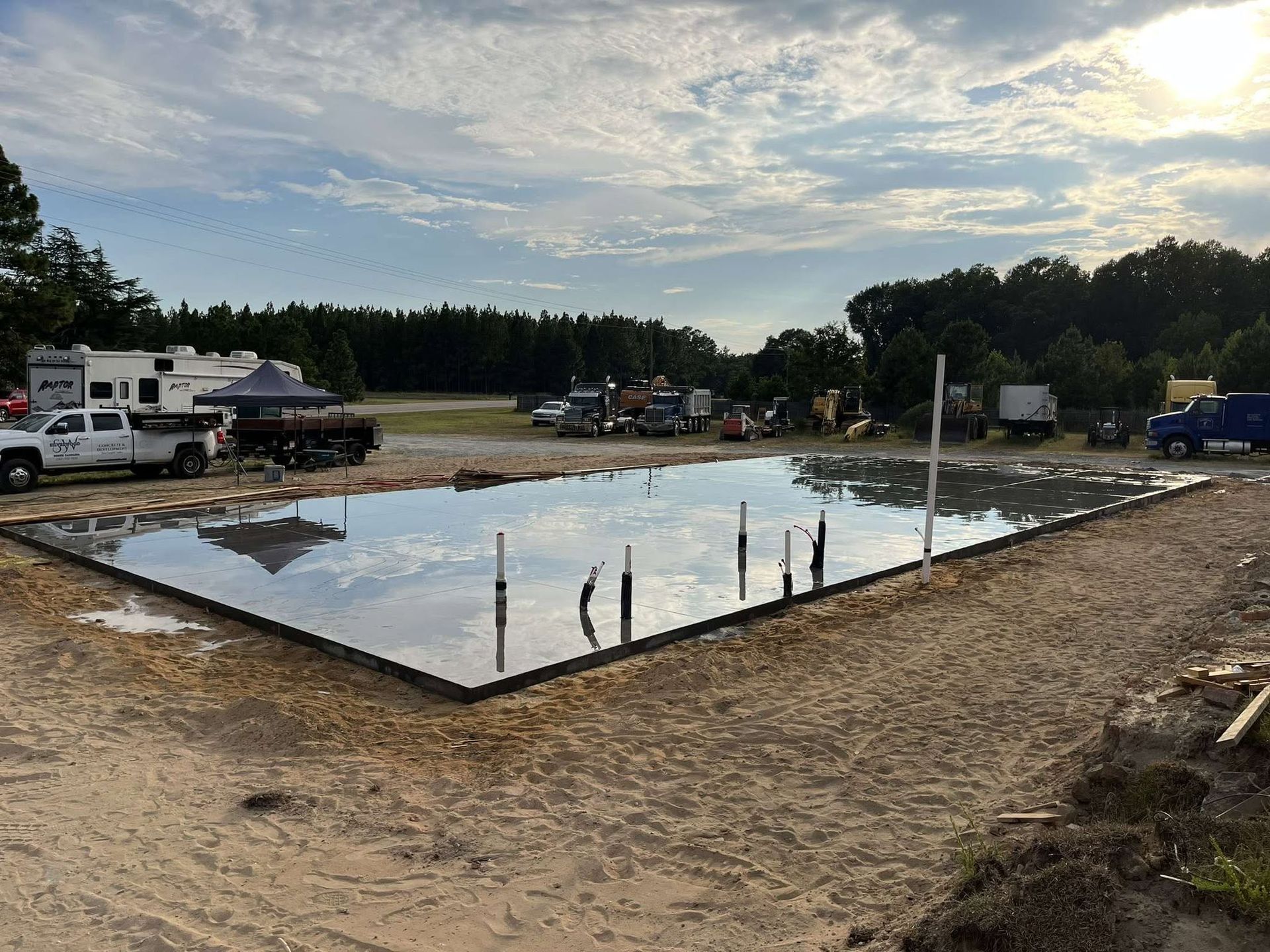
The installation process begins with excavation that creates a slightly deeper perimeter trench for the thickened footing edge while maintaining a level interior area for the slab. Gravel base is compacted across the entire footprint, forms are set to establish finished elevation, and the concrete is placed in one continuous operation that eliminates cold joints between footing and slab sections.
Request a consultation to determine whether monolithic construction fits your project specifications and site conditions.
What Streamlined Installation Delivers
A monolithic slab creates a unified structure where the thickened perimeter edge functions as the footing, distributing building loads into the soil while the interior slab provides the finished floor surface. The single-pour approach eliminates scheduling gaps between footing and slab work, reduces labor costs, and removes the risk of cold joints where separately poured sections might crack under stress. Preparation includes accurate excavation to create the footing trench profile, proper base compaction to prevent settling, and reinforcement placement that addresses both the footing's load-bearing requirements and the slab's crack control needs.
Once cured, the structure provides a level floor ready for framing, with perimeter support that remains stable as walls and roof loads are added. You won't see separation between footing and slab sections or differential settling that causes floors to crack along the perimeter, and the construction timeline shortens because forming, placement, and finishing happen in one coordinated operation.
Monolithic installation includes site excavation, base preparation, forming, reinforcement placement, concrete placement, and finishing. The method works best on stable soils with consistent bearing capacity and on sites where drainage can be controlled through grading rather than requiring deeper foundation systems. Rebar upgrades are determined during plan review based on building size and structural engineering specifications.
What Homeowners Need to Know
Property owners planning new construction or additions often have questions about how monolithic slabs differ from traditional foundation approaches and what site conditions allow this method.
What site conditions are unsuitable for monolithic construction?
Expansive clay soils that shift significantly with moisture changes, sloped sites requiring stepped foundations, or locations with high water tables may need traditional footing-and-stem-wall designs instead of single-pour slabs.
How does fiber reinforcement function in a monolithic slab?
Fiber strands distribute throughout the pour to control shrinkage cracks during curing and hold sections together when soil settles unevenly, preventing small cracks from widening into structural problems.
When should builders choose monolithic slabs over conventional foundations?
Projects with tight construction schedules, buildings with moderate loads that don't require deep footings, and sites with stable soils benefit most from the streamlined installation and cost efficiency of single-pour construction.
What preparation prevents settling after the slab is poured?
Excavation removes organic topsoil, gravel base is compacted to specified density, and moisture content is checked to ensure the subgrade won't compress significantly when building loads are applied.
How long before framing can begin on a new monolithic slab?
Initial curing allows light foot traffic within 24 hours and wall framing within several days, but full strength develops over 28 days, so heavy equipment should be kept off the surface during early curing stages.
NC Outdoor Design Concrete LLC evaluates whether monolithic construction suits your building plans and site conditions, then coordinates installation to keep your project on schedule. Schedule a site review to discuss your timeline and foundation requirements.